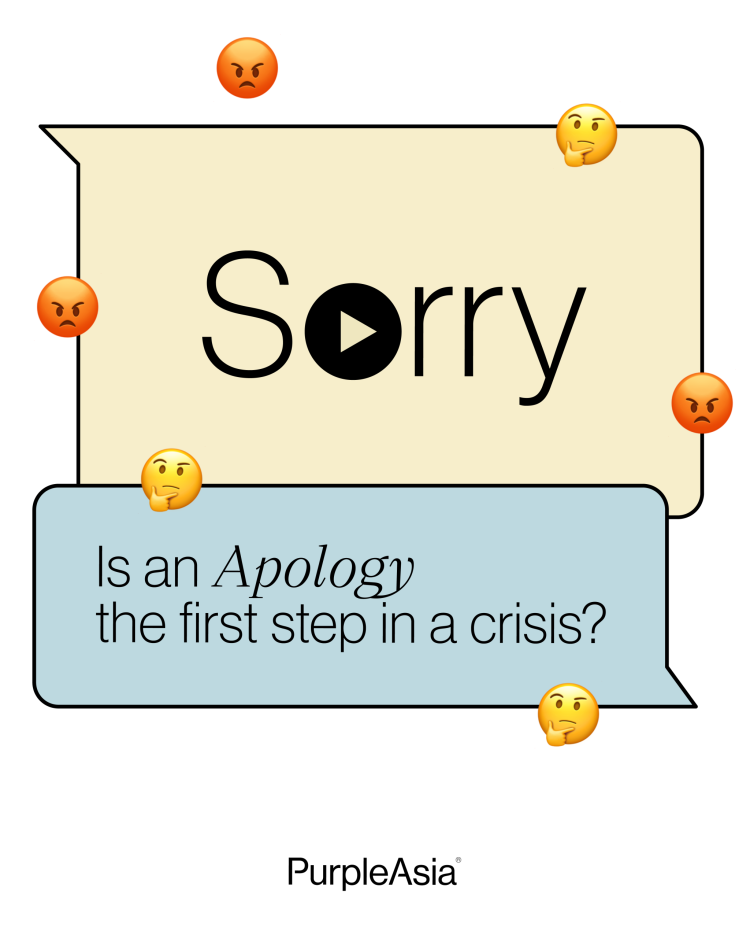
In a world where news travels faster than verification, the pressure to respond instantly can be overwhelming. But the first move in a communications crisis isn’t actually an apology; it’s control.
Too many brands rush to issue statements before understanding the situation when really they should pause and assess before activating.
When you apologise, you’re acknowleding guilt. Instead, publicly confirm that the issue is being reviewed, activate your crisis team, and establish internal clarity before shaping external messaging. Because while, of course, speed matters; precision matters more.
A well-managed response typically follows three phases:
→ Recognition – acknowledge the situation and show responsiveness
→ Evaluation – understand what happened before defining responsibility
→ Resolution – communicate action, accountability, and next steps
An apology only works when it’s informed, sincere, and backed by substance. Without that, it risks sounding reactive, or worse, performative.
The brands that navigate crisis best are the ones prepared for them.
Do you have an established framework? Let’s talk.
Related News